

Why an Aged Bronze Wall Sconce Works for Your Home Office
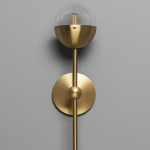
If you’re looking to elevate your home office lighting, an elegant faceted aged bronze wall sconce is a surprisingly versatile and effective choice. It’s not just about aesthetics, though it certainly brings a sophisticated touch. These sconces offer focused task lighting without cluttering your desk, add a warm, inviting ambiance, and their aged bronze finish blends beautifully with a wide range of décor styles, from traditional to modern industrial. Think of it as a practical lighting solution that also happens to look really good, helping you create a more productive and visually appealing workspace.
Understanding the “Elegant Faceted Aged Bronze” Style
Let’s break down what makes this specific type of wall sconce so appealing for a home office. It’s a combination of material, finish, and design elements that come together to create something both functional and beautiful.
The Charm of Aged Bronze
Aged bronze isn’t just a color; it’s a finish with character. Unlike shiny, new brass or chrome, aged bronze has a subdued, often slightly textured appearance that evokes a sense of history and permanence. It’s a deep, rich brown with subtle variations, sometimes showing hints of copper or gold peeking through, giving it that “been around a while” feel. This isn’t your grandfather’s overly ornate bronze; modern aged bronze finishes are often cleaner, more refined, but still retain that desirable warmth.
Why it Suits a Home Office
For a home office, aged bronze offers several advantages. Firstly, it’s not reflective. A highly polished surface can create glare, which is the last thing you want when you’re staring at a computer screen for hours. The matte or semi-matte nature of aged bronze absorbs light rather than bouncing it back, contributing to a more comfortable visual environment. Secondly, its earthy tones are naturally calming and grounding. In a space where concentration is key, a busy or overly bright finish can be distracting. Aged bronze provides a sophisticated backdrop without demanding attention. Lastly, it’s remarkably durable and forgiving. Minor dust or fingerprints aren’t as noticeable on this finish as they would be on a high-gloss alternative, making it a practical choice for a frequently used space.
The Impact of Faceted Design
The “faceted” aspect refers to surfaces that are cut or shaped with multiple flat planes, much like a gemstone. In the context of a wall sconce, this can manifest in various ways:
- The Shade Itself: The most common application is a shade made of faceted glass or metal. This isn’t always about creating a blinding sparkle, but rather about refracting light in interesting ways or casting subtle patterns on the wall. A clear or frosted faceted glass shade can diffuse light beautifully, while a metal faceted shade might direct light in more defined beams, creating a dramatic interplay of light and shadow.
- The Fixture’s Structure: Sometimes, it’s the metalwork of the sconce itself that is faceted. Think of the arms or the backplate having chiseled edges or angular planes. This adds an architectural quality, giving the sconce a more contemporary or Art Deco feel, even with an aged finish.
How Facets Enhance Office Lighting
Faceted elements, especially in the shade, can play a significant role in how light is distributed. Instead of a uniform glow, you might get interesting light patterns on the wall or a more even spread of light that minimizes harsh shadows. For task lighting, a well-designed faceted shade can direct light precisely where you need it on your desk without creating hot spots or glare. It adds visual interest without being overly decorative, striking a balance between form and function – a crucial consideration for a productive workspace.
Elegance in Simplicity and Form
The term “elegant” here doesn’t necessarily mean ornate or extravagant. Often, true elegance lies in clean lines, thoughtful proportions, and a refined aesthetic that doesn’t rely on excessive embellishment. An elegant faceted aged bronze sconce often features:
- Clean Lines: Even with facets, the overall form can be streamlined and uncluttered.
- Balanced Proportions: The size of the backplate, arm, and shade are in harmony.
- Understated Detail: Any decorative elements are subtle and purposeful, not tacked on.
This approach ensures the sconce enhances the space rather than dominates it, making it a good fit for a professional home office environment where visual calm is often preferred.
Functional Benefits for Your Workspace
Beyond looking good, this specific type of wall sconce offers some tangible benefits that can improve your home office experience.
Superior Task Lighting Without Clutter
One of the biggest advantages of a wall sconce, especially for an office, is its ability to provide focused task lighting without taking up precious desk space. Desk lamps, while useful, can eat into your work surface, especially if you have multiple monitors or stacks of papers. A wall sconce, mounted strategically, shines light directly onto your work area from above or slightly to the side, freeing up your desk for essentials.
Strategic Placement for Optimal Illumination
The key here is placement. You’ll want to mount the sconce so that its light falls directly on your primary work surface (keyboard, mousepad, documents) without casting shadows from your head or hands. For most people, this means mounting it above and slightly to the side of their dominant hand, or directly above the center of the desk. The height is also crucial – too low and it can be in your line of sight, too high and the light might be too diffuse. A good rule of thumb is for the bottom of the sconce’s shade to be roughly at eye level when you’re seated, or slightly above, allowing the light to spread downwards.
Creating Ambiance and Reducing Eye Strain
A home office shouldn’t feel like a sterile cubicle. Good lighting plays a huge role in creating an inviting and comfortable atmosphere. While overhead lighting is essential for general illumination, it often isn’t enough on its own and can be too harsh. A wall sconce can provide a softer, more localized light that warms up the space.
The Role of Layered Lighting
This leads to the concept of layered lighting. You want a combination of ambient (general), task, and accent lighting. Your aged bronze wall sconce excels as both a task light and an accent light. When combined with general overhead lighting (like recessed lights or a ceiling fixture) and perhaps some indirect lighting (like an uplight), it creates a balanced lighting scheme that reduces eye strain. By providing multiple light sources, you can adjust the lighting based on the time of day, your activity, or your mood, leading to a more dynamic and comfortable environment. The warm glow from an aged bronze fixture inherently adds to this welcoming ambiance.
Space-Saving and Aesthetic Integration
We touched on the space-saving aspect regarding desk clutter, but it’s worth reiterating how sconces can open up a room. Because they are mounted on the wall, they don’t take up floor space like a floor lamp or surface space like a desk lamp. This is particularly beneficial in smaller home offices where every square inch counts.
Seamless Blending with Decor
The aged bronze finish, especially with a refined, faceted design, is incredibly versatile. It doesn’t scream for attention but rather integrates seamlessly into a variety of design aesthetics.
- Traditional: It complements dark wood furniture, leather, and classic motifs beautifully, enhancing a sense of gravitas and history.
- Modern Farmhouse: The rustic undertones of aged bronze work well with distressed wood, neutral palettes, and practical, comfortable furnishings.
- Industrial: Its metallic nature and robust finish fit perfectly with exposed brick, metal accents, and utilitarian design elements.
- Contemporary/Transitional: With clean lines, an aged bronze sconce can add warmth and texture to an otherwise minimalist space without looking out of place. It provides a bridge between modern simplicity and classic comfort.
This adaptability means your sconce won’t just look good now, but will likely continue to complement your office even if your decor evolves over time.
Installation Considerations and Bulb Choices
Getting your wall sconce set up correctly involves a few practical steps. It’s not overly complicated, but a little planning goes a long way.
Wiring and Mounting Specifics
Most wall sconces are “hardwired,” meaning they connect directly to your home’s electrical system, usually through a junction box in the wall.
DIY vs. Professional Installation
- DIY: If you’re comfortable with basic electrical work (turning off power at the breaker, connecting wires, mounting fixtures), installing a sconce isn’t overly difficult, especially if there’s already a junction box at the desired location. Many sconces come with clear instructions.
- Professional: If you’re not comfortable with electrical work, if there isn’t an existing junction box where you want the light (meaning new wiring needs to be run inside the wall), or if you’re dealing with plaster and lathe walls, it’s always best to hire a licensed electrician. They’ll ensure the wiring is safe, up to code, and the fixture is securely mounted. This is especially true for offices where safety and reliability are paramount.
Planning Placement
Before you even think about wiring, hold the sconce up to the wall at different heights and locations. Consider:
- Viewing Angles: Where will you be sitting? Will the light shine directly into your eyes?
- Desk Coverage: Does the light effectively illuminate your work surface?
- Aesthetics: Does it look balanced on the wall, and does it complement other wall art or furniture?
- Switch Placement: Where will the switch be located? Will it be convenient to access? Some sconces have an integrated switch, while others rely on a wall switch.
Choosing the Right Light Bulb
The bulb you choose has a significant impact on the light quality, temperature, and even the efficiency of your sconce.
Bulb Type and Wattage
- LED (Light Emitting Diode): This is almost always the best choice for a home office. LEDs are incredibly energy-efficient, long-lasting (thousands of hours), and produce very little heat. They come in a wide range of brightness (lumens) and color temperatures.
- Incandescent/Halogen: While they offer a warm glow, they are energy hogs, get very hot, and have a short lifespan. They are generally not recommended for sustained office use.
- CFL (Compact Fluorescent Lamp): More efficient than incandescent, but still not as good as LED. They can take time to warm up, and some people find their light quality less appealing.
For wattage, you’ll want to aim for sufficient brightness without being blinding. For a task light, 400-800 lumens is often a good range, but this depends on the overall lighting in your room and your personal preference. Most sconces will specify a maximum wattage, so ensure your chosen bulb doesn’t exceed this.
Color Temperature (Kelvin)
This refers to the warmth or coolness of the light, measured in Kelvin (K).
- Warm White (2700K – 3000K): This mimics traditional incandescent bulbs, offering a cozy, yellowish light. It’s great for creating a relaxed atmosphere, but for focused task work, it can sometimes feel a bit too dim or sleepy.
- Neutral White/Daylight (3500K – 5000K): This is often ideal for home offices. It’s a crisp, clear light that closely resembles natural daylight. It’s excellent for reducing eye strain, improving concentration, and accurately rendering colors, which is important if you work with design or visuals.
- Cool White (>5000K): While very bright and crisp, it can sometimes feel too stark or clinical for a home office. Best reserved for highly detailed work or spaces needing maximum alertness.
For an aged bronze sconce, which already brings warmth, a neutral white LED often strikes the perfect balance – providing functional clarity while maintaining a pleasant, inviting atmosphere.
Dimmability
Consider a dimmable bulb and a compatible dimmer switch. This allows you to adjust the light output based on the time of day or the task at hand. You might want brighter light for detailed work during the day, and a softer glow for evening tasks or when you’re just winding down.
Style Matching and Design Integration
Making sure your new sconce truly elevates your home office involves more than just picking one you like. It’s about how it fits into the broader design scheme.
Harmonizing with Existing Decor
An aged bronze faceted wall sconce is a statement piece, but it should harmonize, not clash, with your current office aesthetic.
Material and Finish Coordination
- Wood Tones: Aged bronze pairs beautifully with a range of wood finishes. Darker woods like walnut or mahogany echo its richness, while lighter woods like oak or maple provide a pleasing contrast that highlights both elements.
- Metals: While you don’t need every metal in the room to match, aged bronze often complements other matte or brushed metal finishes (like brushed nickel or black iron) better than highly polished chrome or gold. If you have gold accents, ensure they are a warmer, antique gold rather than a bright, modern yellow gold.
- Fabrics: Think about upholstery on office chairs, curtains, or any rugs. Earthy tones, natural fibers like linen or wool, and even rich jewel tones can look fantastic alongside aged bronze.
Color Palettes
Aged bronze is essentially a deep neutral. It works well with:
- Warm Neutrals: Beiges, creams, off-whites, and warm greys create a cohesive, soothing backdrop.
- Earthy Tones: Greens (especially sage or olive), blues (deep navy or slate), and terracotta shades naturally complement the bronze.
- Deep Hues: If your office has an accent wall in a deep color like burgundy, forest green, or even a sophisticated black, the aged bronze will stand out beautifully without feeling overwhelming.
Complementary Furniture and Accessories
Think of your sconce as part of a curated collection. What other elements in your office will enhance its presence?
Desk and Seating
- Desk: A sturdy wooden desk (dark or light), a reclaimed wood desk, or even a glass-top desk with a metal frame can all work. The aged bronze can add a touch of classic sophistication to a more modern desk.
- Chair: Leather office chairs (especially in brown or oxblood), upholstered chairs in neutral tones, or even a task chair with a subtle metal frame can tie in well.
Bookshelves and Storage
Open bookshelves in wood or metal with a mix of books, decorative objects, and perhaps some plants can create visual interest. The aged bronze will pop against these backdrops. Consider if any hardware on your storage units (drawer pulls, cabinet handles) could also be in an aged bronze or a complementary finish to tie things together.
Decorative Accents
- Wall Art: Pieces with natural landscapes, abstract art with earthy tones, or even vintage maps can look great. Frames in dark wood or a complementary metal finish are ideal.
- Plants: Greenery always adds life to a space. Consider a trailing plant on a shelf or a small potted plant on your desk. The natural green is a perfect counterpoint to the aged bronze.
- Desk Accessories: Opt for pen holders, paperweights, or small trays in natural materials like wood, stone, or even a subtle metallic finish that aligns with the sconce. Avoid overly bright or plastic accessories that might clash.
By considering these elements, your elegant faceted aged bronze wall sconce won’t just be a light fixture; it will be an integral part of a thoughtfully designed and highly functional home office.
Maintenance and Longevity
While aged bronze finishes are known for their durability and forgiving nature, a little care goes a long way in ensuring your sconce continues to look great for years.
Simple Cleaning Practices
The good news is, maintaining an aged bronze finish is generally quite straightforward.
Regular Dusting
The most important and frequent task is simple dusting. Dust can accumulate on any surface, and while aged bronze is forgiving, a thick layer will dull its appearance.
- Frequency: Aim for once a week or every other week, depending on how dusty your office gets.
- Method: Use a soft, dry microfiber cloth. Gently wipe down all accessible surfaces of the sconce, including the backplate, arm, and any metal parts of the shade. If the shade is glass, use a separate, slightly dampened cloth to clean the glass, then polish with a dry one to avoid streaks.
Occasional Wiping
Sometimes, dusting isn’t enough, especially if there are smudges or light fingerprints.
- Method: Slightly dampen your microfiber cloth with plain water. Wring it out thoroughly so it’s barely moist. Gently wipe down the aged bronze surfaces.
- Avoid: Do NOT use harsh chemical cleaners, abrasive scrubbers, or polishes intended for shiny metals. These can strip the aged finish and damage the bronze. Alcohol-based cleaners can also be too harsh. A simple damp cloth followed by immediate drying is all that’s usually needed.
Addressing Stubborn Spots
For any truly stubborn spots that water won’t remove (though these are rare on aged bronze), consult the manufacturer’s specific cleaning recommendations. In absence of that, a tiny amount of mild, diluted dish soap on a damp cloth, immediately followed by wiping with a clean damp cloth and then drying, might be an option, but proceed with extreme caution and test in an inconspicuous area first.
Ensuring Electrical Safety and Bulb Longevity
While the finish itself is robust, the electrical components and light bulbs also require some attention to ensure safe and lasting operation.
Periodic Electrical Check
- Tight Connections: If you notice any flickering or inconsistent light, and you’ve ruled out the bulb, it might be a loose connection. If you’re comfortable, ensure the sconce is off at the breaker, then gently check that the wires are securely fastened to the terminals. If not, re-tighten them. If you’re unsure, call an electrician.
- Wiring Integrity: Periodically (perhaps once a year when dusting thoroughly), visually inspect the visible wiring for any signs of fraying, cracking, or damage. If you see any, immediately turn off the power and call an electrician.
Maximizing Bulb Life
- Use Recommended Wattage: Always stick to the maximum wattage rating specified for your sconce. Exceeding it can overheat the fixture and shorten bulb life.
- Avoid Frequent On/Off Cycles (for non-LEDs): If you’re still using CFLs or incandescents, turning them on and off frequently can shorten their lifespan. This isn’t as much of an issue with LEDs, which are very durable in this regard.
- Clean Bulbs: Dust can accumulate on bulbs and reduce their light output. While the power is off and the bulb is cool, gently wipe it with a dry microfiber cloth.
- Replace Promptly: When a bulb burns out, replace it promptly with a new one of the correct type and wattage. Don’t leave an empty socket for extended periods.
By following these simple maintenance tips, your elegant faceted aged bronze wall sconce will not only provide excellent lighting for your home office but will also remain a beautiful and timeless design element for many years to come. It’s an investment in both function and style, and with a little care, it will repay that investment handsomely.