


Let’s talk about how to brighten up those long, often overlooked hallway spaces without making them feel cramped or visually cluttered. When you’re dealing with a narrow corridor, the idea of adding more fixtures might seem counterintuitive. But with the right approach, specifically minimalist ceiling lights, you can achieve both ample illumination and an open, airy feel. Think of it as a strategic way to use light to your advantage in tight spots.
So, can minimalist ceiling lights Lappinlighting save space in your corridors? Absolutely. The key is their design: unobtrusive, streamlined, and often flush-mounted, they take up minimal visual and physical real estate while delivering the light you need. They’re not just about being functional; they’re about enhancing the flow and feel of your home.
The “Why” Behind Minimalist Corridor Lighting
Corridors are transitional spaces. They’re the arteries of your home, guiding you from one room to another. Yet, they’re often neglected when it comes to lighting design. This can lead to them feeling dark, cramped, and uninviting. Traditional, bulky light fixtures can further exacerbate this by visually shrinking the space. That’s where minimalist ceiling lights shine.
Maximizing Perceived Space
The primary benefit of minimalist lighting in a corridor is its ability to make the space feel larger. Bulky fixtures protrude downwards, drawing the eye and creating a sense of a lower ceiling. Flush-mount or semi-flush mount minimalist designs sit close to the ceiling, minimizing this visual intrusion. This creates a cleaner line of sight and allows the corridor to feel more expansive. It’s like choosing slim-fit furniture for a small room – it creates the illusion of more space.
Enhancing Flow Without Obstruction
Think about walking down a narrow corridor. You don’t want to be bumping into or constantly looking up at light fixtures. Minimalist designs offer a smooth, unobstructed path. Their low profile means fewer “head-knockers” and a less visually busy environment. This is particularly important in high-traffic areas where ease of movement is a priority.
A Modern Aesthetic Appeal
Beyond functionality, minimalist lighting often aligns with contemporary interior design trends. Clean lines, simple forms, and understated elegance contribute to a sophisticated look. In a corridor, this translates to a polished entry point that sets the tone for the rest of your home. It’s about creating a subtle statement rather than a loud one.
What Exactly Is a Minimalist Ceiling Light?
When we talk about “minimalist” in this context, we’re referring to a design philosophy focused on simplicity, essentialism, and a lack of unnecessary ornamentation. In lighting, this translates to fixtures that are clean, unfussy, and focus on delivering light effectively without drawing attention to themselves. They’re the opposite of ornate chandeliers or elaborate sconces.
Understanding Flush-Mount vs. Semi-Flush-Mount
These are the two main categories of ceiling lights that work wonders for space-saving in corridors.
Flush-Mount Lights: The Ultimate Space Saver
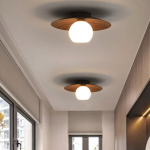
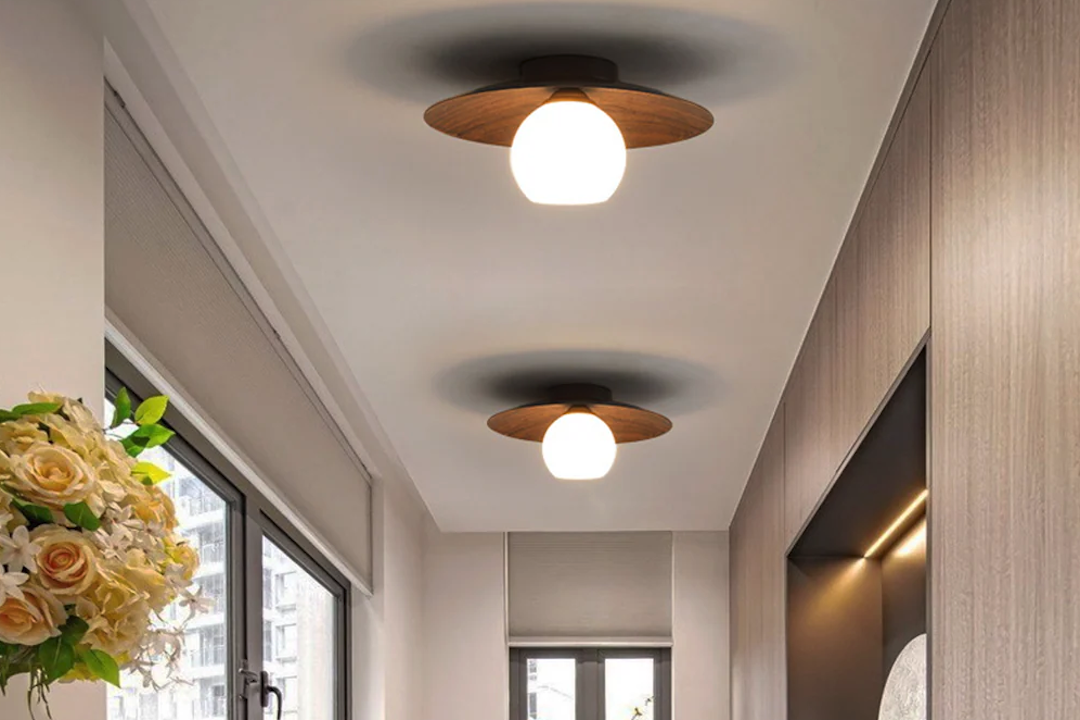
A flush-mount fixture is installed directly against the ceiling. There’s no visible gap between the fixture and the surface. This is the most effective option for creating the illusion of height and maximizing headroom. Think of a sleek, disc-like light or a simple square panel. They blend seamlessly with the ceiling, effectively becoming part of the architecture rather than an added element.
- Pros: Maximizes headroom, creates a clean, modern look, less likely to be bumped into, good for low ceilings.
- Cons: Can sometimes feel a little too “flat” if not chosen carefully, can make the ceiling feel a bit monotonous if not styled well.
Semi-Flush-Mount Lights: A Touch of Style with Height Consideration
Semi-flush mounts hang slightly below the ceiling, typically with a small gap. This gap allows for a bit more decorative flair or a more diffused light distribution. While they do take up a little more vertical space than flush-mounts, they still maintain a much slimmer profile than pendant lights or chandeliers. They can be a good compromise if you want a slightly more designed look without sacrificing too much headroom.
- Pros: Can offer more design variety, can direct light downwards more effectively, a good middle ground for moderate ceiling heights.
- Cons: Takes up a bit more vertical space than flush-mounts, might still feel slightly less open in very low ceiling situations.
Materials and Finishes That Enhance Minimalism
The materiality of your light fixture plays a significant role in its minimalist impact.
Common Materials and Their Effect
- Opal or Frosted Glass: These diffuse light beautifully, creating a soft, even glow that is easy on the eyes and avoids harsh shadows. They contribute to a serene and uncluttered appearance.
- Acrylic: Similar to frosted glass, acrylic diffuses light well and is often used in contemporary, simple designs. It’s lightweight and durable.
- Metal (Brushed Nickel, Chrome, Matte Black, White): These finishes are often found in minimalist designs. Brushed finishes offer a subtle sheen, while matte finishes absorb light, further contributing to a understated look. White and black are classic minimalist choices that blend effortlessly with most ceilings.
The Importance of Uncluttered Forms
Regardless of material, the shape of the fixture is paramount. Look for simple geometric shapes like circles, squares, or rectangles. Avoid anything with intricate patterns, dangling elements, or exposed bulbs that aren’t part of a specific minimalist design statement (like integrated LED strips).
Strategic Placement: Where Less is More
The beauty of minimalist ceiling lights is that you don’t necessarily need a dozen of them to light a corridor effectively. Thoughtful placement is key.
Illuminating Long, Narrow Passages with Fewer Fixtures
In a long corridor, instead of installing lights every few feet, consider a more strategic approach. One central, well-sized minimalist fixture might be enough for a shorter corridor. For longer ones, two or three strategically placed fixtures can provide even illumination without making the space feel like a runway.
The Power of a Single, Well-Chosen Fixture
For shorter corridors (say, under 10-12 feet), a single, appropriately sized flush-mount light in the center can provide ample light. The key is to ensure the fixture is wide enough to cast light across the desired area. A good rule of thumb is to have the light source reach within a foot or two of the walls.
Doubling Up: Spacing for Even Coverage
For longer corridors, consider spacing two or three fixtures evenly. A common recommendation is to place the first fixture about one-third of the way down the corridor from the entrance, and the last fixture about one-third of the way from the end. This ensures that the light is distributed evenly, preventing dark spots and creating a consistent glow.
- Example: In a 20-foot corridor, you might place lights at roughly the 7-foot and 14-foot marks.
Accent Lighting Considerations (When Appropriate)
While the focus is on overall illumination, you might occasionally consider a very subtle accent light. However, for true space-saving minimalism, this is often best avoided. If you do want a touch of accent, think about very slim picture lights pointing at artwork, but this is secondary to the main ceiling lighting.
Avoiding Over-Lighting for a Softer Ambiance
The goal of minimalist corridor lighting is often to create a welcoming and serene atmosphere, not to brightly illuminate a factory floor. Over-lighting can make a narrow space feel harsh and even more confined. Choose fixtures that provide a comfortable, ambient light.
The Benefits of Integrated LED Technology
Modern minimalist ceiling lights almost universally feature integrated LED technology, and for good reason. This technology perfectly complements the minimalist ethos.
Energy Efficiency and Longevity
LEDs are incredibly energy-efficient, consuming significantly less power than traditional incandescent or halogen bulbs. This translates to lower electricity bills. They also have an exceptionally long lifespan, meaning you’ll be replacing bulbs far less often – a practical benefit that aligns with the “less fuss” aspect of minimalism.
Reduced Maintenance, More Peace of Mind
Think about how often you might have to climb a step ladder to change a bulb in a hallway fixture. With integrated LEDs that can last for tens of thousands of hours, this becomes a rarity. This contributes to the overall ease of maintenance for your home, which is a core tenet of a practical, minimalist lifestyle.
Consistent Light Quality and Color Temperature
Integrated LEDs offer consistent light output and color temperature over their lifespan. You won’t experience the gradual dimming or color shifting that can occur with older bulb technologies. This ensures your corridor lighting remains reliably appealing.
Selecting the Right Color Temperature (Kelvin)
The “warmth” or “coolness” of light is measured in Kelvin (K).
- Warm White (2700K – 3000K): This is akin to traditional incandescent bulbs, creating a cozy and inviting atmosphere. It’s generally a good choice for residential corridors to foster a welcoming feel.
- Cool White (3500K – 4000K): This provides a brighter, more neutral light that can make spaces feel more alert and clean. It’s often used in kitchens or bathrooms. For a corridor, it can work if you want a crisper, more contemporary feel, but be mindful it can sometimes feel a bit sterile if too cool.
- Daylight (5000K+): This is very bright and bluish, mimicking natural daylight. It’s typically too intense and cool for most residential corridors.
For corridors, aiming for a warm white or a neutral white (around 3000K) is usually the sweet spot for creating a comfortable and inviting ambiance.
Dimmability for Versatility
Many integrated LED minimalist lights are dimmable. This is a fantastic feature for corridor lighting because it allows you to adjust the light intensity based on the time of day or your mood. You can have brighter light when you need to find something, or a softer, more ambient glow in the evening.
Setting the Mood: From Task Lighting to Ambiance
A dimmable fixture offers true versatility. In the daytime, or when you need to navigate with luggage, you can have the light at its full brightness. In the evening, you can dim it down significantly to create a subtle, guiding light that’s not overpowering. This adaptability is a hallmark of smart, practical design.
Making the Right Choice: Practical Tips for Selection
Choosing the right minimalist ceiling light involves more than just picking the prettiest one. Consider these practical aspects to ensure you get the best performance for your space.
Size Matters: Matching the Fixture to Your Corridor
The scale of your light fixture needs to be appropriate for the size of your corridor.
Measuring Your Corridor and Ceiling Height
Before you even start browsing, measure the length, width, and importantly, the height of your corridor. This will inform the maximum depth of a semi-flush mount you can comfortably use and the appropriate diameter for a flush-mount.
- For flush mount: The diameter should generally not be more than one-third of the width of the corridor. For instance, in a 3-foot wide corridor, a flush mount around 10-12 inches in diameter would likely be suitable.
- For semi-flush mount: The fixture’s height should be considered relative to the ceiling. If your ceilings are very low (under 8 feet), flush-mount is almost always the best choice. If you have 8-foot ceilings or higher, a shallow semi-flush mount (hanging no more than 4-6 inches from the ceiling) could work.
Avoiding Over-Sized or Under-Sized Fixtures
A fixture that is too large will overwhelm a narrow space, making it feel even more cramped. Conversely, a fixture that is too small will not provide adequate light and can look lost.
Light Output (Lumens): Ensuring Sufficient Illumination
The brightness of a light is measured in lumens. You want enough lumens to comfortably illuminate the corridor without making it feel blinding.
Calculating Your Lighting Needs
There aren’t rigid rules for corridor lumens, as it depends on personal preference and the overall ambiance you’re going for. However, a general guideline for hallways and general living areas is around 10-20 lumens per square foot.
- Example: For a 3ft x 15ft corridor (45 sq ft), you might aim for 450-900 lumens total from your fixture(s). A single 800-lumen fixture would likely be sufficient.
Understanding Wattage vs. Lumens (Especially with LEDs)
Don’t get too caught up in wattage with LEDs, as it’s a measure of energy consumption, not brightness. Always look for the lumen output on the packaging.
- An LED bulb that uses 10 watts might produce the same brightness as a 60-watt incandescent bulb.
Installation Considerations: DIY vs. Professional
While many minimalist ceiling lights are designed for straightforward installation, it’s always good to be aware of what’s involved.
Simple Wiring and Mounting
Most flush-mount and shallow semi-flush mount fixtures involve connecting a few wires (live, neutral, ground) to corresponding wires from your junction box and then securing the fixture base to the ceiling.
When to Call in an Electrician
If you’re not comfortable working with electrical wiring, or if your existing wiring seems old or problematic, it’s always best to hire a qualified electrician. They can ensure the installation is safe and up to code. This is especially important in older homes.
Beyond the Corridor: Applying the Minimalist Principle Elsewhere
The principles of using compact, efficient, and aesthetically simple lighting can be applied to other small or awkward spaces in your home. Think of it as a system.
Smaller Entryways and Mudrooms
These areas often suffer from the same space constraints as corridors. A sleek flush-mount fixture can provide the necessary light without encroaching on headroom, which is especially useful when you’re trying to put on shoes or hang up coats.
Closets and Pantries
While often overlooked, functional lighting in these storage areas is crucial. Simple LED ceiling lights ensure you can easily see what you’re looking for, and their low profile means they won’t interfere with stored items.
Powder Rooms and Compact Bathrooms
In small powder rooms, a flush-mount or a very slim semi-flush mount light can provide ample light without making the space feel cluttered. This preference for understated fixtures ties into the broader trend of decluttering and creating more serene, functional environments.
In conclusion, minimalist ceiling lights are a fantastic solution for anyone looking to maximize space and improve the aesthetic of their corridors. By focusing on form, function, and smart placement, you can transform these transitional areas from afterthoughts into bright, inviting pathways.